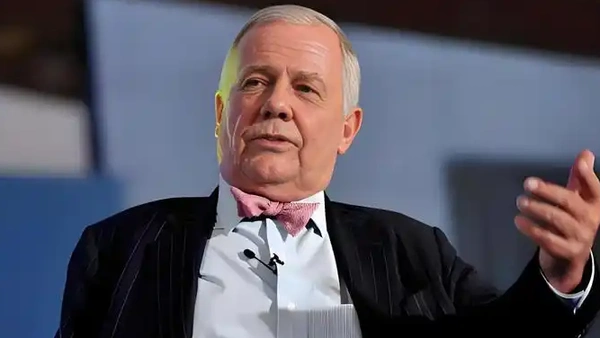
Veteran investor Jim Rogers has confirmed that he has sold off equities in most countries around the world, including the United States, retaining only Chinese and Uzbek stocks — and intends to bequeath his China holdings to his two daughters.
Rogers, 84, made the remarks in a telephone interview on September 7, as foreign institutions step up their purchases of Chinese A-shares. "China will become the next great country," he said. "Rome was great, Britain was great, but China has already been great three or four times. China is now rising again, so almost any company will do well in China."
A lifetime bet on China
Rogers said he hopes his daughters will be smart enough to buy even more Chinese stocks. "In my children's lifetimes, China will be the most important country in the world," he said. "Chinese companies and the Chinese economy will matter enormously throughout their lives."
He described his investment approach as rooted in value: the first step is understanding price — judging whether a company's shares or a country's stock market is cheap. He also advised ordinary investors to learn to save and invest, noting that both matter in every country, and especially in a rising one.
Who is Jim Rogers?
Rogers co-founded the Quantum Fund with George Soros in 1970. Between 1973 and 1980 the fund returned a cumulative 4,200%, while the S&P 500 rose only about 47% over the same period — a record that earned him a place alongside Warren Buffett and Soros among the world's most celebrated investors. He is also widely known as the 'Commodities King'.
An American investor and financial commentator, Rogers is based in Singapore. He is married to author and philanthropist Paige Parker; the couple have two daughters — Hilton Augusta ('Happy'), born in 2003, and Beeland Anderson ('Bee'), born in 2008. Born in New York and raised in Singapore, the girls were educated in Mandarin, a language Rogers has long insisted is essential for their future. His personal net worth is widely reported at roughly US$300 million.
The broader 'China allocation' trend
Rogers' stance comes amid a marked shift by global institutions toward Chinese equities. According to Wind data, foreign institutions held 122.246 billion A-shares worth 3.47 trillion yuan as of the end of the second quarter of 2026, up 4.75% from the prior quarter. Electronics was the largest holding, followed by power equipment, with semiconductors among the sectors seeing the biggest additions.
By the QFII channel, 52 qualified foreign institutional investors appeared among the top ten tradable shareholders of 1,724 A-share companies, with combined holdings exceeding 340 billion yuan — up more than 191.7 billion yuan from the previous quarter. Northbound capital, meanwhile, had 3.13 trillion yuan in A-shares by mid-August, topping 3 trillion for the first time, with semiconductor holdings above 450 billion yuan.
Analysts frame the trend as a bet on China's industrial upgrading and supply-chain strength. Citi upgraded Chinese equities to 'overweight' in July, and Goldman Sachs published a report on the China AI value chain. Rogers' personal allocation — and his plan to hand it to the next generation — adds a long-horizon signal to that debate.
Netizen reaction: 'Still trapped'
Rogers' remarks drew widespread discussion on Chinese social media, much of it tinged with irony. A common reaction among retail investors was that Rogers is welcome to stay bullish — but that many domestic investors remain 'stuck' (被套) by years of a volatile A-share market, having bought in at higher levels. Others argued his multi-decade horizon is simply a different game from the short-term struggles of ordinary retail traders, and that a billionaire's long-term conviction says little about near-term market pain.




No comments yet. Be the first to share your thoughts.